
By Dr Tshilidzi Madzivhandila, Chief Executive Officer and Head of Mission, FANRPAN
This year’s World Food Day theme, Innovate today. Nourish tomorrow., speaks directly to Africa.
For the first time, our continent is home to more hungry people than any other region. The State of Food Security and Nutrition in the World 2026 estimates that 309 million Africans faced hunger in 2025, and that two in three could not afford a healthy diet. It also brings some hope: after years of increase, hunger in Africa stopped rising in 2025.
Whether that turn holds will depend in large part on how well we use science, technology and innovation. Innovation in agriculture has two sources. One is the laboratory and the research station. The other is the farm, where generations of African farmers have tested, adapted and passed on what works. African leaders have recognised both. In the Kampala Declaration, which guides the continent’s agrifood agenda to 2035, they committed to invest in research that generates new technologies and, in the same commitment, to promote indigenous knowledge and practices. Our task now is to make the two work together.
Producing more from the land we already farm
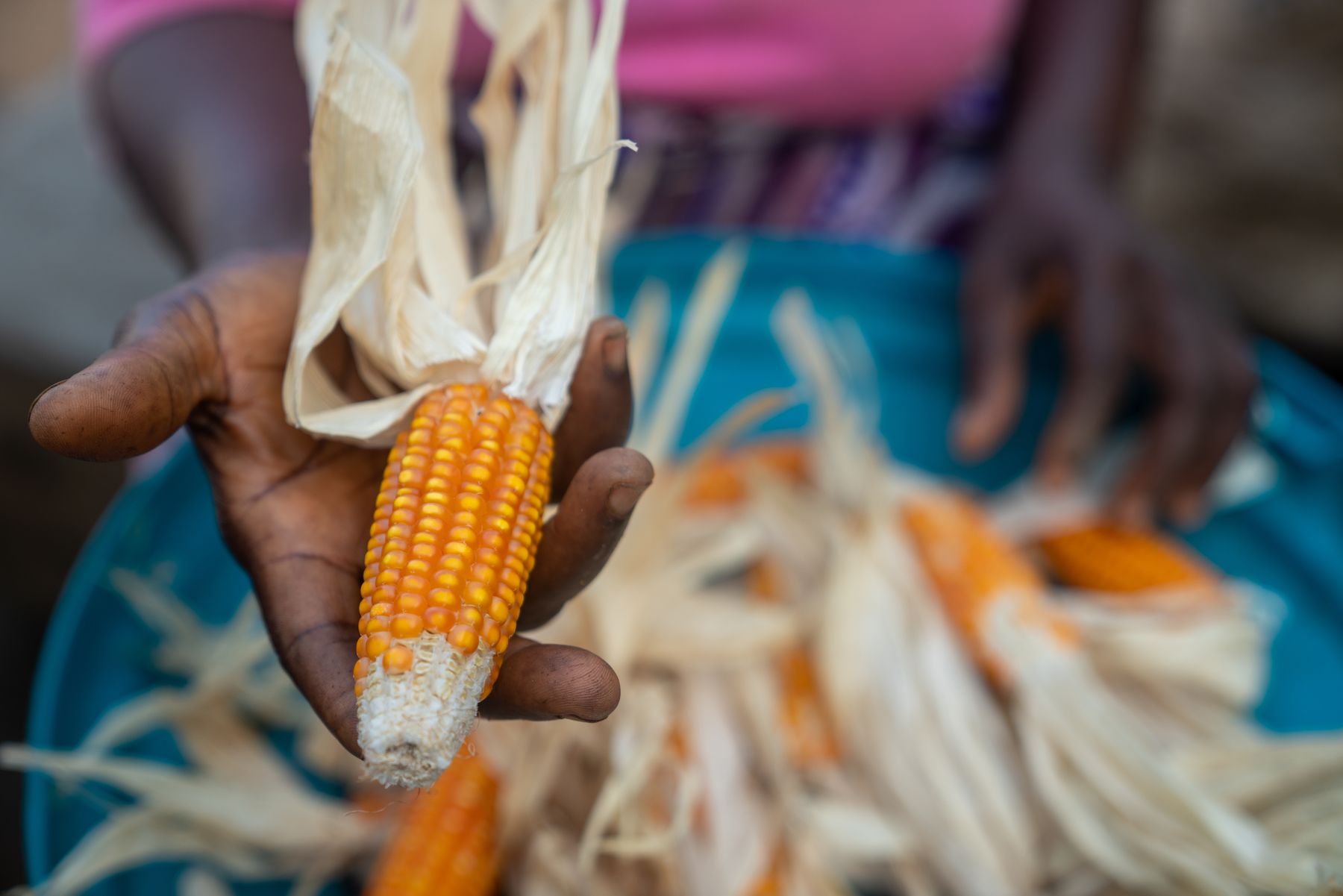
The value of agricultural science is well documented. In Kenya, Uganda and Tanzania, farmers using climate-smart push-pull, developed by the International Centre of Insect Physiology and Ecology, which intercrops maize with fodder plants that repel and trap pests, averaged 4 tonnes of maize per hectare across 400 fields, against 1.5 tonnes for other farmers. This year’s State of Food Security and Nutrition report also links higher yields and sustained public spending on agricultural research to a lower cost of a healthy diet.
Yet Africa underfunds the science it needs. An African Union report found that the continent invested just 0.39 percent of its agricultural GDP in agricultural research in 2016, down from 0.54 percent in 2000 and well below the continental target of 1 percent.
Investment alone is not enough. A new variety changes nothing until a farmer can buy it, trust it and grow it. The 2026 report is clear that productivity gains depend on seed delivery, water, land tenure, finance and extension. This is why FANRPAN’s seed work looks at institutions as closely as at technology. In Eswatini, we supported the revival of the National Seed Committee in August, bringing government, researchers, farmers, the seed industry and civil society back to one table after several years of inactivity.
Keeping the food we grow
Producing more makes little sense if much of it is lost before it reaches a plate. Sub-Saharan Africa has the highest food loss rate of any region: FAO estimates that 23 percent of the region’s food was lost after harvest and before reaching retailers in 2023. In the Kampala Declaration, African leaders committed to halve post-harvest loss by 2035 and called for innovation in handling, storage and transport.

Some of the most effective answers are simple. In a trial in northern Benin, maize kept for seven months in airtight hermetic bags showed no weight loss or insect damage, while maize in ordinary woven bags lost over 10 percent of its weight.
Waste can also become a resource. For World Food Day, the Australian Centre for International Agricultural Research has told the story of farmers in our Circular Food Systems project in Mozambique, Tanzania and Zimbabwe who turned crop residues and other by-products into feed, fertiliser savings and new rural businesses. In Uganda, through CS-PILLAR, FANRPAN supports a national working group, chaired by the Ministry of Agriculture, Animal Industry and Fisheries, that is shaping the evidence on post-harvest losses and food safety.
Helping smallholder farmers adapt
Climate change is already costing African farmers. The Intergovernmental Panel on Climate Change finds that it has reduced agricultural productivity growth in Africa by 34 percent since 1961, more than in any other region. Heatwaves and droughts have increased, and 95 percent of cropland in sub-Saharan Africa depends on rain.
Science offers real tools, from drought-tolerant varieties to climate information services, which the panel finds can mark the difference between merely coping and informed adaptation when they respond to farmers’ needs. Farmers’ own innovations matter just as much. In Niger, hundreds of thousands of farmers who protect and manage the trees that regenerate naturally on their fields have created about 5 million hectares of new agroforestry parkland since the 1980s, raising crop yields and supporting food security in drought years.

Livestock keepers need animal health services that reach them. In Zimbabwe, FANRPAN is supporting a national process towards the formal recognition of Community Animal Health Workers within the animal health system.
The panel also finds, with high confidence, that Africa’s indigenous and local knowledge systems provide a rich foundation for adaptation, and that recognising them in law can reduce vulnerability. That finding should shape how we deliver every one of these tools.
Indigenous knowledge is part of the science
African farmers read clouds, winds, the flowering of trees and the behaviour of insects and birds to judge when rain will come. They select and save seed suited to their land, and keep crops and breeds that cope with stress. This is knowledge built through observation and long experiment.
Where scientists work with it rather than around it, the results follow. In western Kenya, the Kenya Meteorological Department works with the Nganyi community’s traditional forecasters to produce combined seasonal forecasts that local farmers trust, and farmers report greater confidence in acting on them.
The same holds for food. Many of Africa’s traditional and indigenous foods are nutritious and cope well with heat and drought, yet they sit at the margins of policy and investment. FANRPAN saw this first-hand when, with support from the World Food Programme, it coordinated scoping studies on indigenous foods in 15 member states of the Southern African Development Community for the Community’s Secretariat. The regional synthesis found that:
- indigenous foods are rich in nutrients, resilient to climate variability and need fewer agrochemicals, yet with few exceptions, such as sorghum, their value chains remain underdeveloped and largely outside formal markets;
- production rests mainly with smallholder farmers using traditional practices, so supply is seasonal and unreliable, and most produce is sold raw;
- poor access to packhouses, storage and cold chains shortens shelf life and leads to high waste of perishable products;
- agricultural policies and resources favour established staples such as maize, wheat and rice, few measures target indigenous foods, and private investment is held back by low awareness of the opportunity and perceived risk; and
- indigenous foods, and the knowledge behind them, are vulnerable to misappropriation because they lack formal recognition and protection.
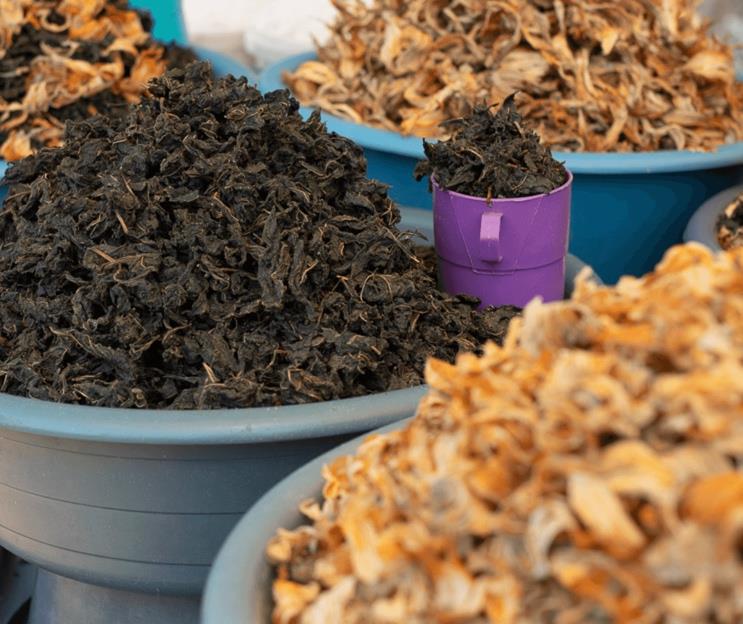
The studies identified seven priority foods for a regional development programme: sorghum, cassava, amaranth, cowpea, breadfruit, local fish and local chickens. The Kampala Declaration now commits governments to boost nutritious traditional and indigenous crops through policy reform and financing. The task is to turn that commitment into budgets, markets and research.
Three principles should guide how we bring these knowledge systems together. The first is co-production: farmers and knowledge holders should help shape research questions and judge results, not only receive them. The second is recognition: seed laws and extension services should make room for farmer-managed seed alongside the formal seed sector. The third is fairness: the International Treaty on Plant Genetic Resources for Food and Agriculture already recognises farmers as custodians and developers of crop diversity, and where their knowledge or genetic resources contribute to new products, they should share in the benefits, through the access and benefit-sharing rules our scoping studies recommend.
From commitment to delivery
The Kampala Declaration sets clear targets for 2035: raise agrifood output by 45 percent, halve post-harvest loss and triple intra-African trade in agrifood products. Meeting them will take more than new technology. Four priorities stand out.
- Public investment in agricultural research and extension, with African institutions setting the agenda. The climate panel found that between 1990 and 2019, research on Africa received only 3.8 percent of global climate research funding, and only 14.5 percent of that went to African institutions.
- Delivery systems that work for smallholders: seed regulation, markets, finance and advisory services, including digital ones.
- A deliberate place for women and young people. On farms of the same size, women’s land productivity is 24 percent lower than men’s, a gap driven by less secure land rights, less access to credit and training, and technology designed for men. The Kampala Declaration commits to halve the yield gap between men and women farmers by 2035.
- Evidence that shows policymakers what works, for whom and at what cost, so that budgets follow results. The Kampala Declaration itself calls for evidence-based decision-making and mutual accountability.
The last priority is FANRPAN’s part of the work. We connect evidence with policy, and bring governments, researchers, farmers, the private sector and civil society to the same table, as set out in our 2025–2035 Strategic Plan.
Innovating today
Innovation is not only a new machine or a new app. It is also a seed committee that meets again, a forecast that farmers trust, and a traditional practice that is tested, improved and shared.
On this World Food Day, my call is simple. Let us invest in African science. Let us respect, test and protect the knowledge our farmers already hold. And let us build the institutions that bring the two together. That is how Africa will nourish itself tomorrow.