
From Antalya
to Addis Ababa
Africa's farmers, food systems and climate action, one dialogue a month. Thirteen conversations that carry the lessons of COP31 in Türkiye to COP32 in Ethiopia.
Tuesday 1 December 2026
10:00 to 12:00 SAST, on Zoom
Dialogue 01 | Inaugural webinar
What do the COP31 outcomes mean for African agriculture and food systems?
We take stock of COP31 and start shaping Africa's climate and agrifood agenda for COP32.
08:00 to 10:00 GMT
Programme
All times SAST. Speakers are subject to confirmation.
Where the road begins
FANRPAN at COP31
In Antalya, FANRPAN took one question into eight sessions: does the money reach the farm? The series picks up that question and carries it to Addis Ababa.
 COP31 panelDr Tshilidzi Madzivhandila, FANRPAN Chief Executive Officer, on a COP31 panel
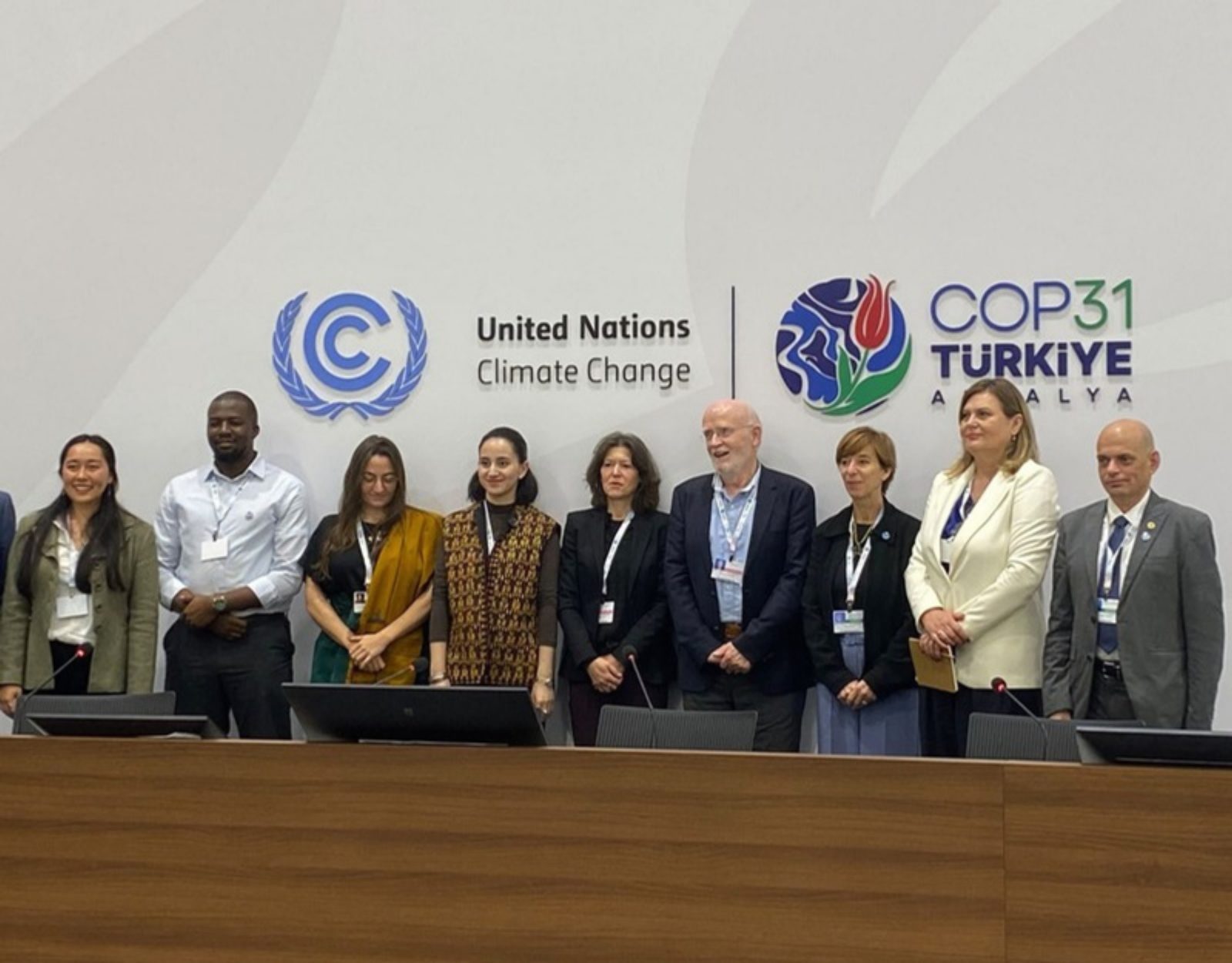 17 NovemberSpeakers at the Integrated Security side event, Antalya
 16 NovemberPanel at the ASEAN Pavilion
 Side eventOn the panel at the UN Climate Change venue
 Antalya, TürkiyeCOP31, 9 to 20 November 2026
 ASEAN PavilionPanellists after the session
 COP31FANRPAN's Chief Executive Officer making the case for farmers
Photos: FANRPAN. Select a photo to enlarge it.
Where this series comes from · FANRPAN at COP31
Eight sessions. One question.
Between 9 and 19 November 2026, FANRPAN’s Chief Executive Officer and Head of Mission, Dr Tshilidzi Madzivhandila, and Program Manager, CS-PILLAR, Mr Suwilanji Sinyangwe, spoke at eight sessions in Antalya. One question ran through all of them: how can global climate commitments and financing translate into tangible benefits for Africa’s farmers and vulnerable communities? This series carries that question to Addis Ababa.
Restoring Land, Redirecting Finance: Delivering the Just Rural Transition for Food Security
Repurposing public support
Public Support for Agriculture as a Climate Mobility Strategy
Climate mobility
The Triad of Food Systems under Climate Change: Incentives for Affordable, Healthy, Sustainable Food
Food system incentives
Repurposing Agricultural Support: From Nordic Lessons to European and Global Action
Repurposing public support
From Policy to Investment: Operationalising the Nutrition, Climate and Gender Nexus in Agricultural Transformation
Nutrition, climate and gender
Integrated Security and Climate Change: Building Resilience amid Geopolitical Challenges
Security and resilience
Connecting Adaptation and Food Security: From UNFCCC Negotiations to Delivery on the Ground
Adaptation
Where Does the Money Stop? Tracking Climate Finance to Africa’s Farmers, from COP to Crop
Climate finance
Why this series
COP31 left three questions open for African farmers
COP31 closed without a cover decision. Each dialogue works on one of these questions, so that every month adds a concrete input for COP32.
What happens to agriculture in the climate talks now that the Sharm el-Sheikh joint work on agriculture and food security has ended without a substantive outcome?
How will the pledge to at least triple adaptation finance by 2035 be measured and delivered?
What should an African-hosted COP32 deliver for farmers?
The series links the global negotiations to continental, regional and national action. It draws on African research, community experience and investment priorities, and supports the CAADP Kampala Strategy and Action Plan (2026 to 2035), the African Union climate strategy, the Africa Fertilizer and Soil Health Action Plan, and national climate and biodiversity plans.
One number
Of every 1,000 dollars of tracked climate finance in 2019/20, about 8 reached small-scale agrifood systems. The other 992 went elsewhere.
Each dot is one dollar. 0.8% of tracked climate finance, 2019/20.
The journey
Thirteen months on the road to Addis Ababa
One dialogue a month, each with its own theme. Highlighted stops mark the milestones. Themes and dates may be refined through consultation.
COP31 outcomes: what they mean for Africa and the road ahead
From continental commitments to national action: Kampala, NDCs and NAPs
Climate finance, loss and damage, fair access and private investment
Water security, drought early warning, irrigation and dryland farming
Locally led adaptation, local planning and financing
Indigenous foods, biodiversity and nature-based solutions
Agriculture and food systems in the global climate negotiations
Healthy soils, seed systems, resilient landscapes and climate-smart agriculture
Youth, women, green jobs and a fair transition for all
Resilient livestock, One Health and sustainable value chains
Pre-COP32 consultation: Africa's shared voice and investment priorities
COP32 in Addis Ababa: showcasing African solutions
Post-COP32 review: action and accountability
Evidence dashboard
Does the money reach the farm?
The question FANRPAN carried through COP31, in numbers. Choose a theme. Every figure links to its source.
Nearly half of the world's hungry people now live in Africa. The continent's share of global emissions is a fraction of that.
Hunger in Africa, 2025
People in Africa facing hunger: about one in five (20.0%). Africa now has more hungry people than Asia.
Share of the world's hungry
309 million of the 645 million people facing hunger worldwide in 2025. Our calculation from SOFI 2026 figures.
Hunger against emissions
Africa's share of each. Greenhouse gases include land use; fossil CO2 covers fuels and industry.
Greenhouse gases: Our World in Data, Jones et al. 2025↗Fossil CO2: Our World in Data, Global Carbon Project↗
A healthy diet out of reach
Share of people in Africa who cannot afford a healthy diet. Falling globally, rising in Africa.
Food insecurity, 2025
Share of Africa's population facing moderate or severe food insecurity.
Jobs in agriculture
Share of all employment in sub-Saharan Africa that is in agriculture, 2025. Updates itself from World Bank data.
Climate finance needs met in Africa, 2021/22
Tracked climate finance reached USD 43.7 billion in 2021/22, still well short of what African countries need to deliver their climate plans.
African governments' own climate finance
USD billion a year, falling as fiscal space tightens.
Less than one dollar in every hundred of tracked climate finance reached small-scale agrifood systems.
Reaching the farm
Share of tracked climate finance that reached small-scale agrifood systems in 2019/20.
Trend
Fall in annual climate finance for small-scale agrifood systems between 2017/18 and 2019/20.
Public money already in the system
Spent by governments every year on public support to agriculture. How it is spent matters as much as new money.
The 2026 fertiliser shock showed how fast a distant crisis reaches an African planting season.
Urea price, index (February 2026 = 100)
Rise in the urea price after the Strait of Hormuz effectively closed.
Where the urea comes from
Share of the world's traded urea that comes from the Middle East.
Malawi, 2026/27 season (tonnes)
Fertiliser in stock against annual demand as the rains approached. Demand estimated at 450,000 to 475,000 tonnes.
What happens after the harvest, and how support reaches farmers, decides how much of a crop becomes food and income.
Maize lost after harvest
Of Zambia’s maize is lost after harvest each year, by APHLIS estimates (16.2% to 17.2%).
African Postharvest Losses Information System, Zambia maize↗
Reaching farmers directly
Zambian farmers the input support e-voucher is set to reach once roll-out is complete.
Africa has set its own targets. The test now is delivery.
CAADP Kampala Strategy and Action Plan
Increase in Africa's agrifood output targeted by 2035 under the CAADP Strategy and Action Plan 2026 to 2035.
Adaptation finance pledge
The pledge to at least triple adaptation finance by 2035. Dialogue 03 asks how it will be measured and delivered.
COP30 decision (Belém, 2025)
Figures are shown as reported by each source. The Malawi bars and the urea index are drawn from the reported figures.
What the series will produce
From dialogue to decisions
Each dialogue builds towards practical inputs that African negotiators, governments and partners can use before and at COP32.
Policy briefs
A short brief after each dialogue, with the evidence and the recommendations.
Bonn submission
An input to the June 2027 Bonn sessions on agriculture and food systems.
Finance evidence
Evidence on whether adaptation finance actually reaches farmers.
Flagship publication
A flagship publication, launched at a COP32 side event in Addis Ababa.
Built in public
Africa's agenda for COP32, one dialogue at a time
After each dialogue, we add what we heard and what we recommend. By the time COP32 opens in Addis Ababa, this record will hold the agenda the series has built in the open.
What we heard and what we recommend will be added here after Dialogue 01 on 1 December 2026.
After 1 Dec
Added after the dialogue.
Upcoming
Added after the dialogue.
Upcoming
Added after the dialogue.
Upcoming
Added after the dialogue.
Upcoming
Added after the dialogue.
Upcoming
Added after the dialogue.
Upcoming
Added after the dialogue.
Upcoming
Added after the dialogue.
Upcoming
Added after the dialogue.
Upcoming
Added after the dialogue.
Upcoming
Added after the dialogue.
Upcoming
Added after the dialogue.
Upcoming
Each entry links to the policy brief and recording once they are available.
The open floor
Add your voice to the road to COP32
Ask the panel a question, share evidence from your country, or give us one idea Africa should take to Addis Ababa. The panel sees the questions, and contributions can inform the dialogues and the briefs.
Share the series
1 Comment
Submit a Comment
Voices on the road to COP32
Contributions so far: 0 · Countries: 0
Conveners and partners
Convened by FANRPAN and TrustAfrica
FANRPAN leads each dialogue and invites institutions to contribute to or co-convene individual sessions. Partners can nominate speakers or experts, share evidence and case studies, bring in their networks, contribute to policy briefs or co-convene a session.
1 December 2026
Join the first dialogue
Two hours on what COP31 means for African agriculture and food systems, and what Africa should push for on the road to Addis Ababa.
[Evidence · South Africa] Small-scale agrifood systems receive about 0.8% of tracked climate finance, and that share fell by 44% between 2017/18 and 2019/20 (Climate Policy Initiative, 2023). At COP31 I proposed tracking three things at the country level: how much committed climate finance is disbursed, how much reaches districts and communities, and how much goes to last-mile services like extension and seed inspection. The CAADP Biennial Review could carry this without a new reporting system.