
8 October 2025, Cape Town, South Africa
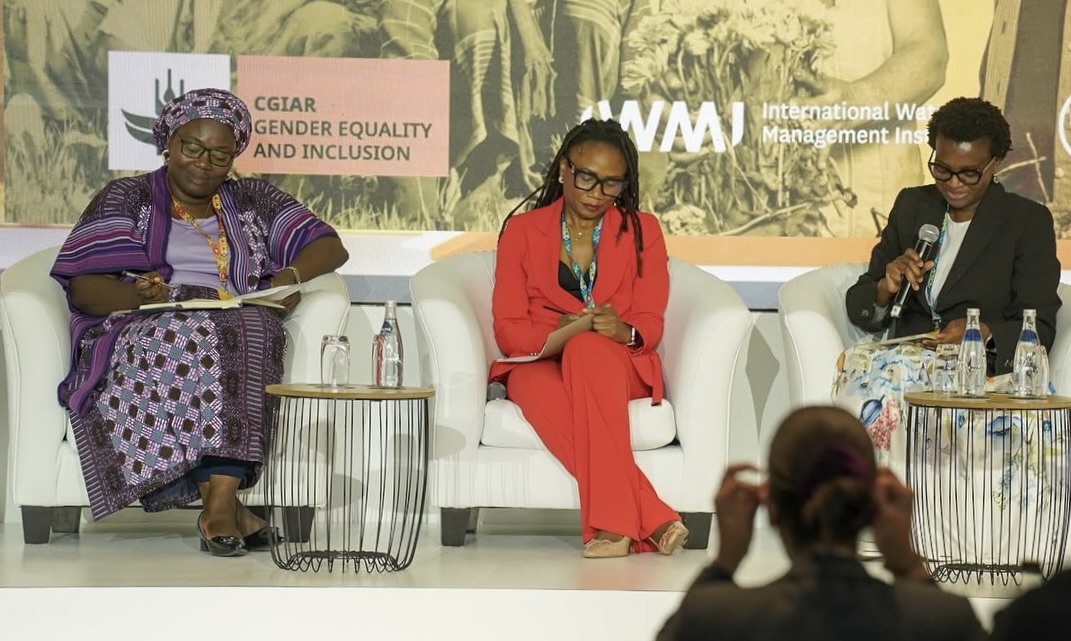
During the International Conference on Accelerating Equality in Food, Land and Water Systems in Cape Town, South Africa, Dr. Rachel Isabel Mkandawire, representing the Food, Agriculture and Natural Resources Policy Analysis Network (FANRPAN), participated as a speaker in the AGRA-organized side event held on Wednesday, 8 October 2025. The side event, titled “Women’s Access to Resources and Technology: A Key to Agricultural Food System Transformation,” explored gender-responsive innovations that enable women’s empowerment and leadership in agri-food systems across Africa.
Dr. Mkandawire’s presentation, “From Margins to Movers: Strengthening Young Women’s Leadership in Food Systems Policy Processes in East and Southern Africa,” drew from ongoing work led by FANRPAN, in collaboration with AGRA, with support from the Youth Employment in Food and Agriculture (YEFFA) initiative. Through the FANRPAN–YEFFA Fellowship and Mentorship Programme, implemented alongside Ms. Sithembile Mwamakamba and Ms. Stella Massawe, the Network focuses on equipping young women with practical skills in policy analysis, advocacy, and evidence translation. The programme creates a learning pathway that connects research, mentorship, and leadership development, nurturing a new generation of policy influencers who can drive inclusive and transformative change in food systems across Eastern and Southern Africa.
In her address, Dr. Mkandawire highlighted that agriculture remains the backbone of livelihoods across Eastern and Southern Africa, yet youth, especially young women, remain underrepresented in policy processes that shape the sector’s future. Their exclusion limits innovation, weakens food system transformation, and reduces opportunities for inclusive economic growth. She emphasized that while regional frameworks such as CAADP, RAIPs, AfCFTA, and the African Agribusiness Youth Strategy (AAYS) recognize the importance of youth and gender inclusion, implementation remains uneven, and progress at the national level is still limited. Strengthening mentorship, regional collaboration, and youth-responsive policy frameworks is essential to move from rhetoric to institutionalized inclusion and sustainable impact.
The session brought together practitioners, researchers, and policy actors from across Africa to discuss how empowering women’s agency and access to technology can accelerate equitable and climate-resilient food systems transformation. Discussions underscored the importance of bridging the gap between policy commitments and implementation on the ground, ensuring that women and youth are not only beneficiaries but active contributors to the design and monitoring of agricultural and trade policies.
The presentation also emphasized that mentorship drives visibility and leadership of young women in policy spaces; gender inclusion in trade and agricultural policy frameworks remains a critical gap; and regional collaboration amplifies youth voices and ensures continuity in shaping Africa’s food systems transformation.